The mushrooms I actually forage in Wisconsin
Five mushrooms make up basically all of my foraging: oyster, honey, aspen, pheasant back, and reishi. Everything else I walk right past.
The rule I don't break: if I'm not 100% on what something is, I don't eat it. Not 90%, not "pretty sure." There's no mushroom worth a hospital trip, and some of the good ones have a look-alike that'll ruin your week.
I pick in two places mostly: up around my camp near Crivitz, and in the wooded parks around Milwaukee. You'd be surprised what's coming up in a city park once you start actually looking down.
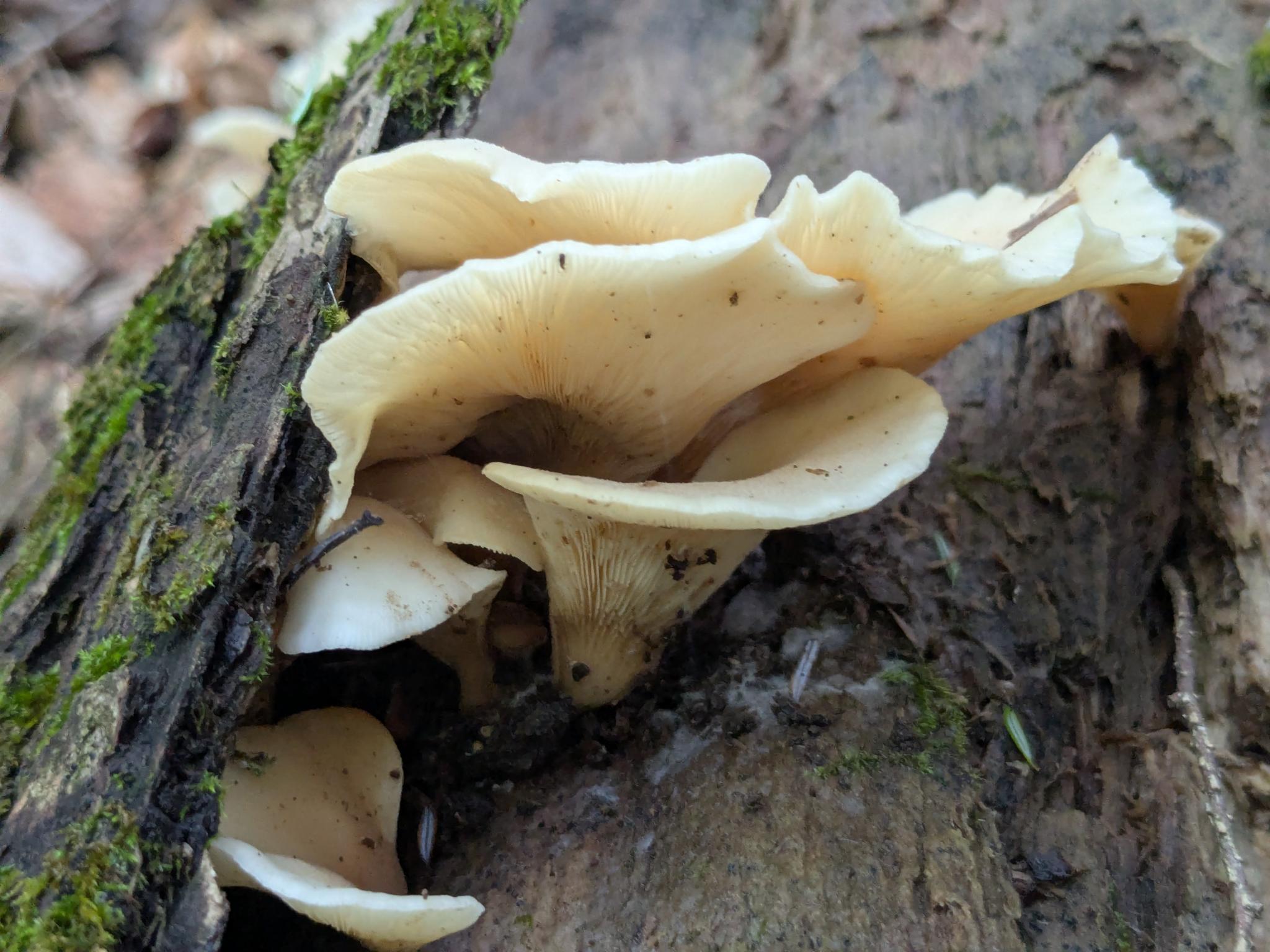
Oyster
Oysters are the one I'd point a beginner at. They grow in shelves off dead and dying hardwood, they're tough to confuse with anything that'll hurt you, and they keep fruiting into cold weather after everything else has quit.
Aspen
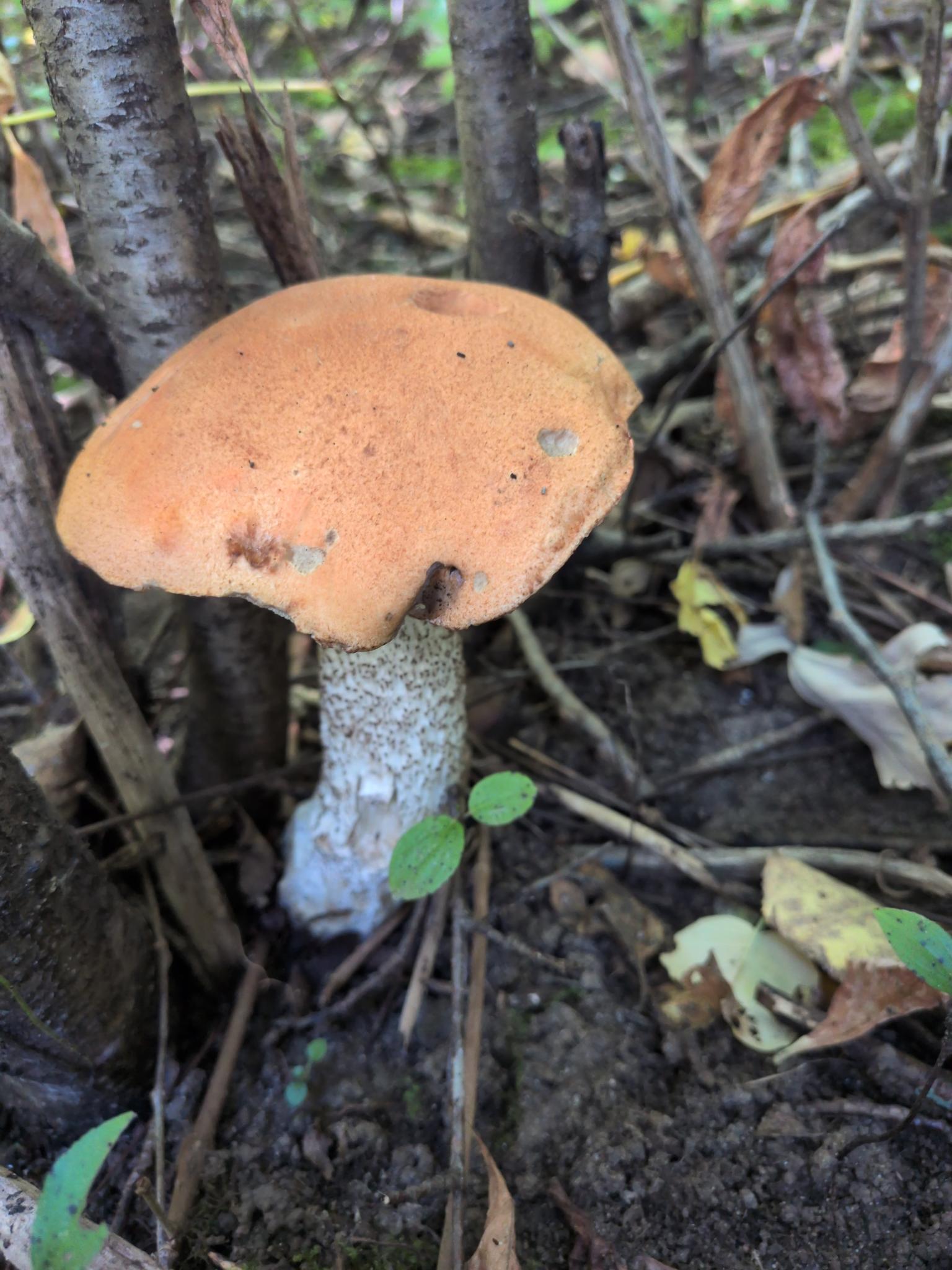
Orange cap, dark flecks down the stem, growing under aspens like the name tells you. Once you've seen a few they're easy to spot from a distance — that orange pops against the leaf litter. Cook them all the way through.
Honey
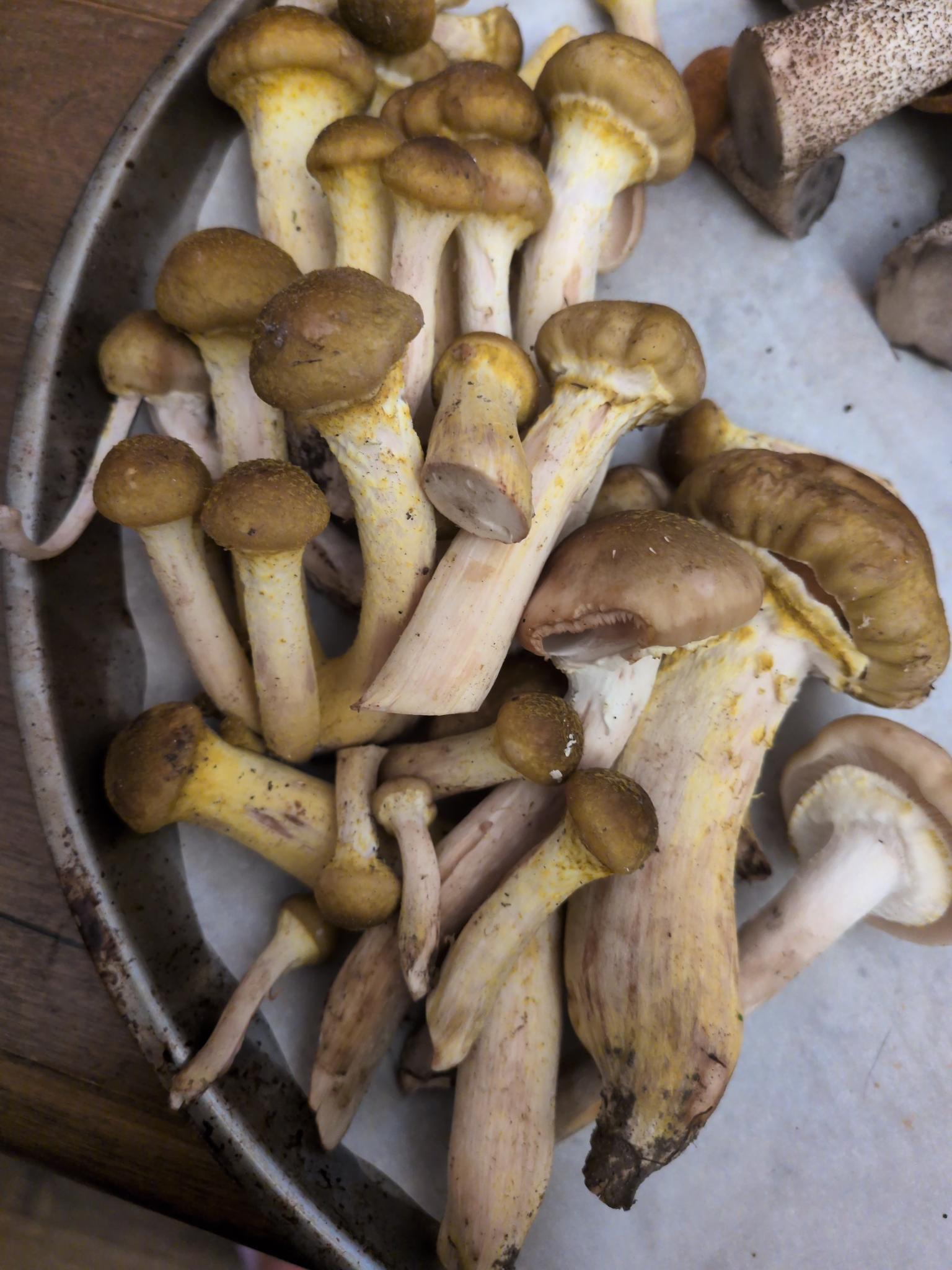
Honey mushrooms come up in big clusters around stumps and roots in the fall, so when you find them you usually find a lot. Good eating. But they upset some people's stomachs even cooked, so cook them hard, and the first time you try them, eat a small amount and see how you do.
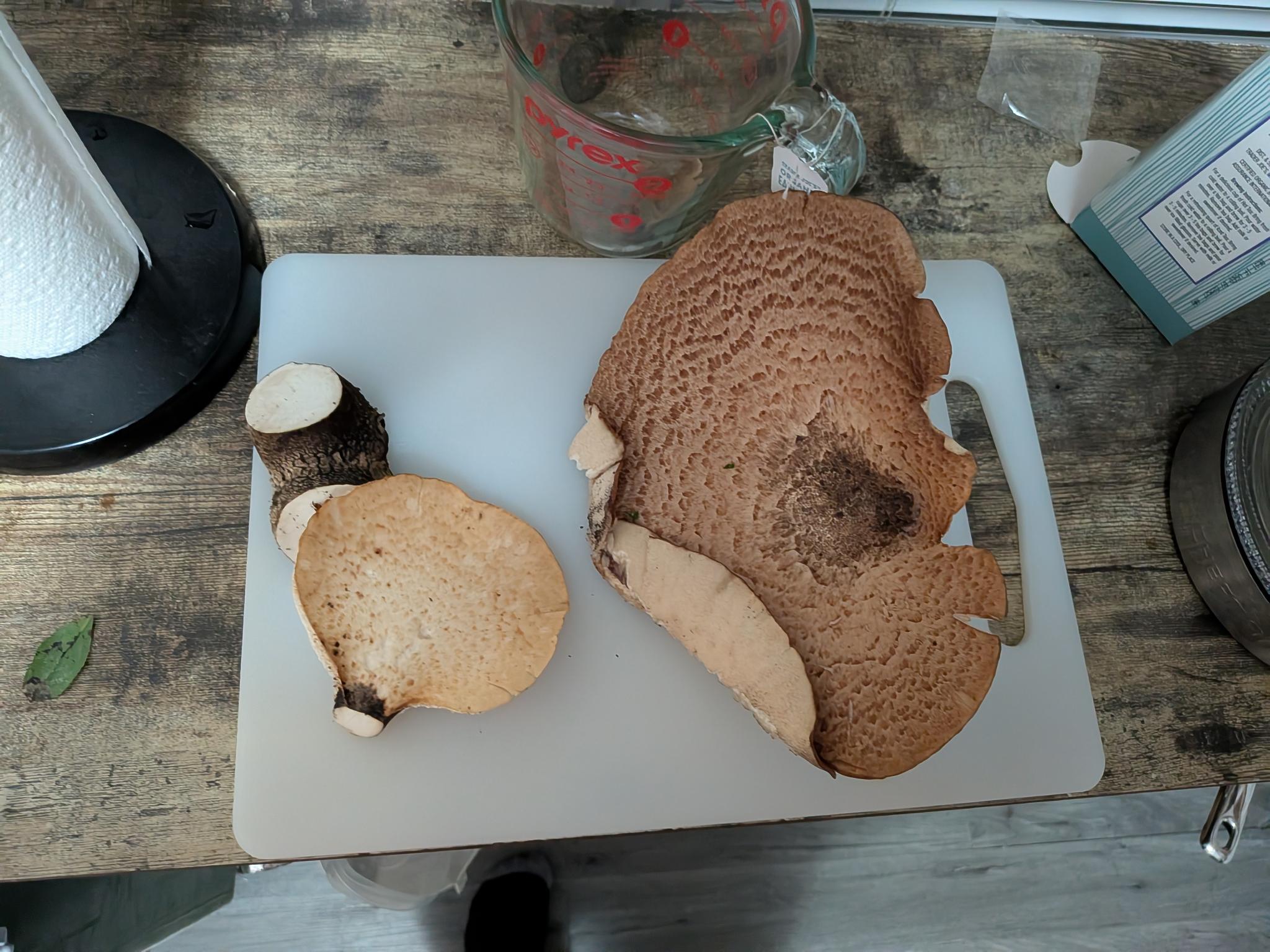
Pheasant back
You can smell this one before you're even sure of it — sharp, like a cut watermelon rind. Only worth taking young and tender. Let it get big and it turns to cork you can't chew.
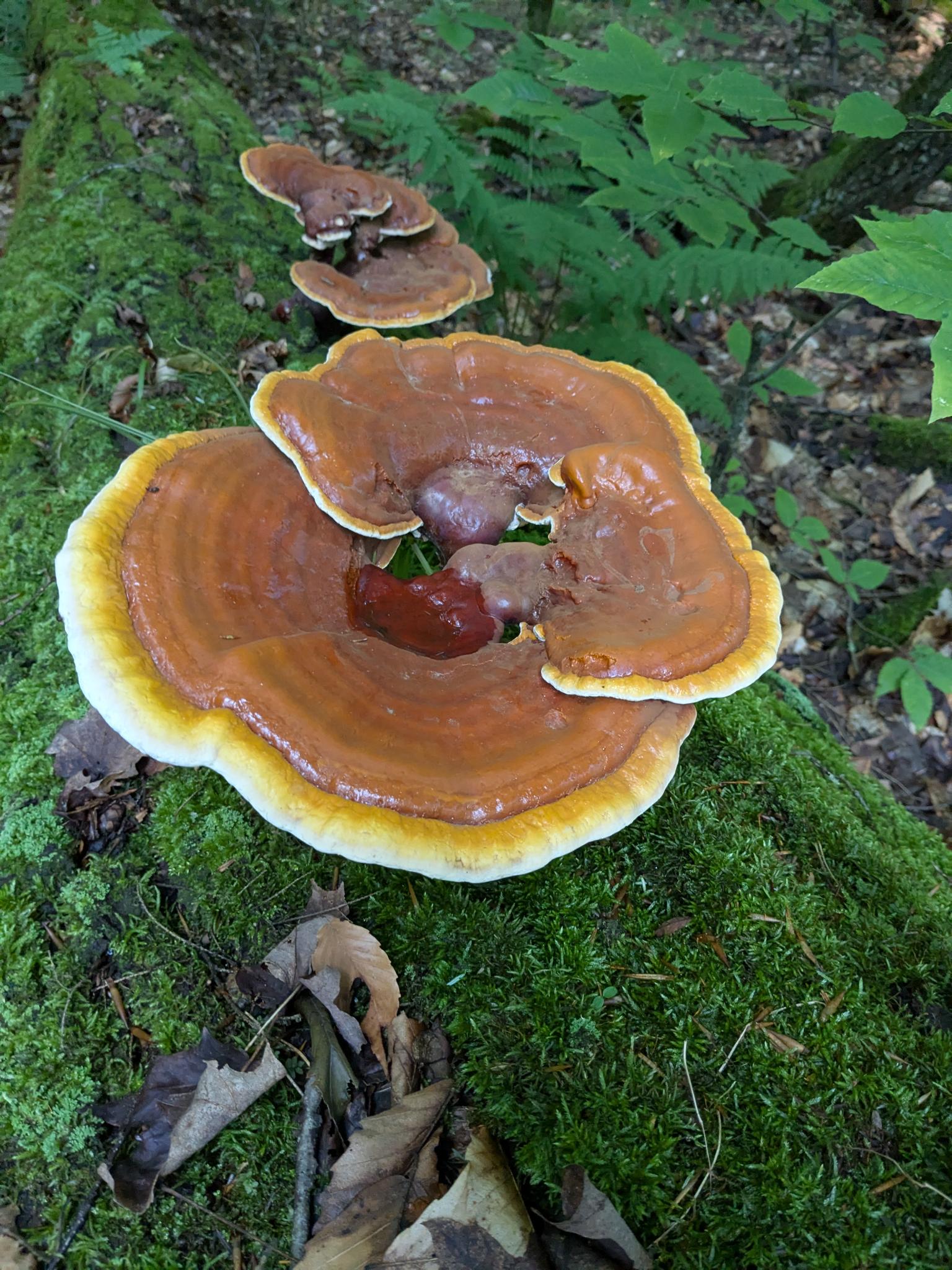
Reishi
Reishi's not an eating mushroom — it's woody, you're not putting it in a pan. I dry it and use it for tea. It's the one on this list I go after for something other than dinner.
What we do with them
A good day ends up looking like this — a couple kinds sorted out on the table.
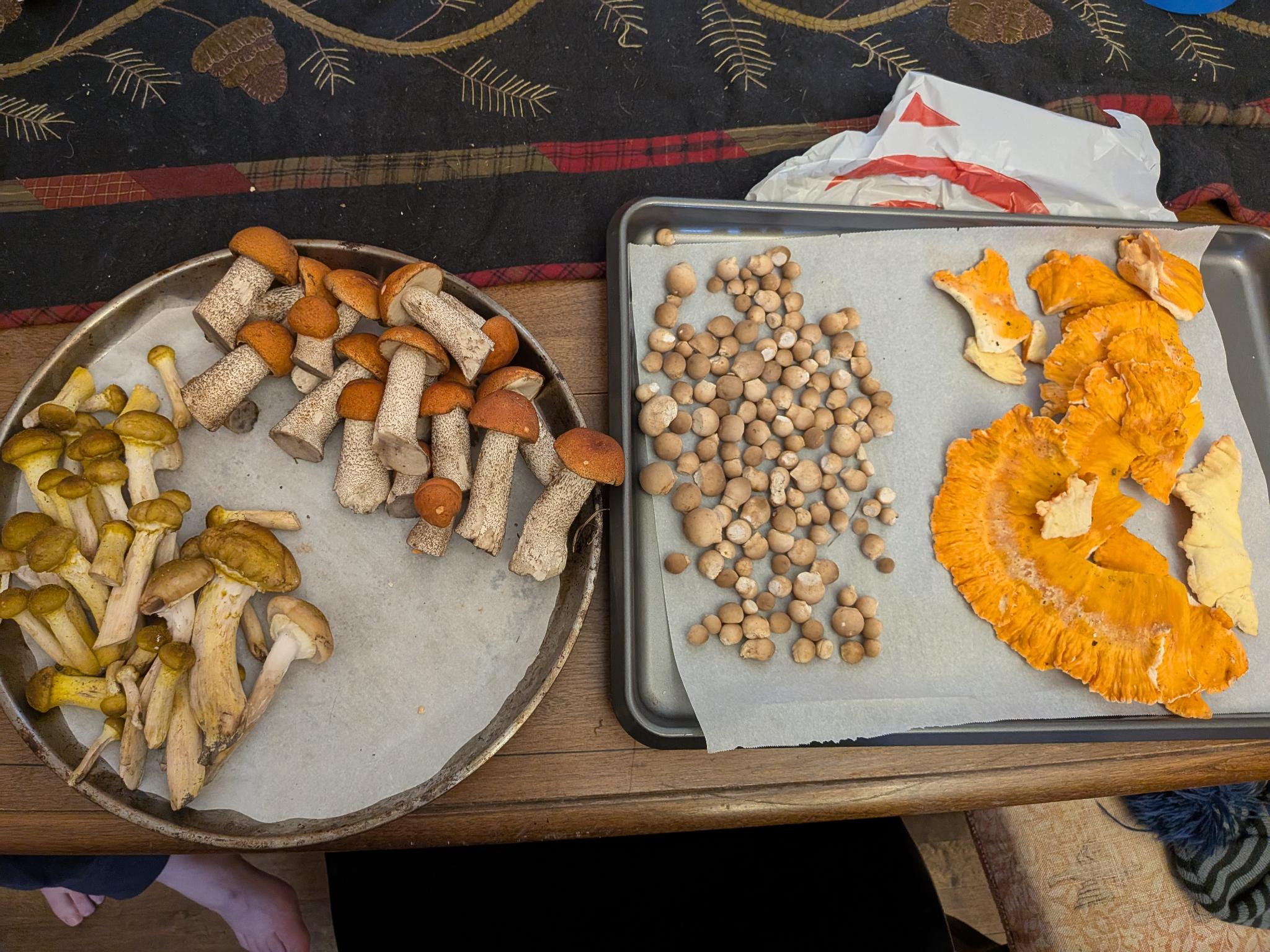
We cook a big batch the same night we bring them in, because fresh is the whole point and they don't keep long.
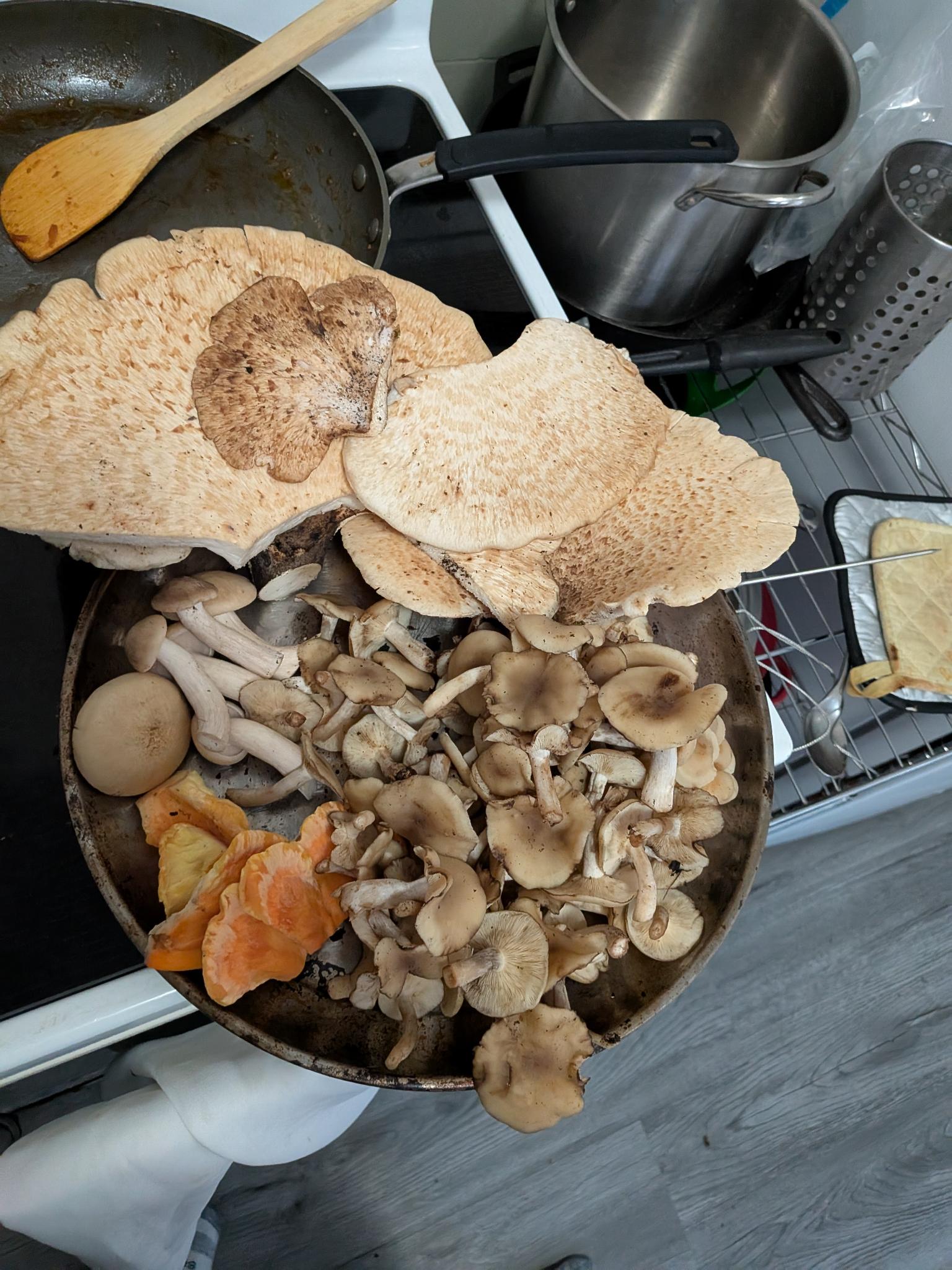
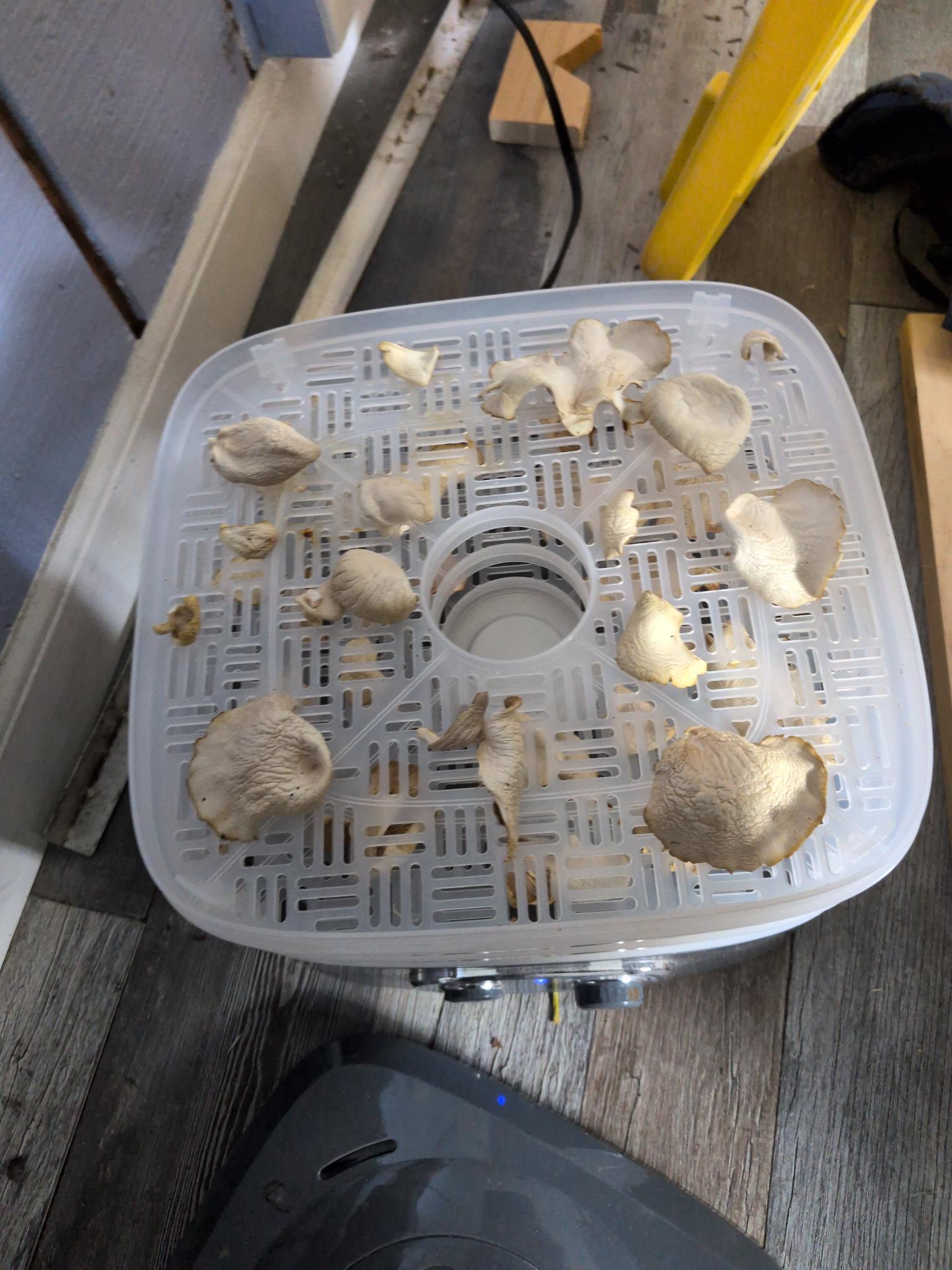
The rest go in the dehydrator and get dried all the way down. Those go into soups through the winter, right alongside the dried ramps, kale, and spicy peppers from the garden. Pick mushrooms in October, eat mushroom soup in February.